PDF files are the most reliable format for sharing structured documents across school, workplace, and personal environments. Their fixed layout preserves fonts, tables, and formatting on any device, making them ideal for reports, essays, contracts, and archived files. Even with these advantages, most compiled or downloaded PDFs lack proper page numbering.
Unnumbered multi-page PDFs create consistent workflow headaches. Readers struggle to locate specific sections, reference key details, or follow structured content sequences. Printed PDFs often end up jumbled, with no clear way to sort misplaced pages. Fixing this simple formatting issue should be fast and straightforward, yet many traditional methods overcomplicate the process.
Most standard PDF editing solutions require heavy desktop software installations. These programs take up valuable device storage, demand frequent updates, and come with overwhelming advanced features users never actually need. For basic tasks like page numbering, downloading full PDF suites is completely inefficient.
Thankfully, you can easily add page numbers to PDF without software using lightweight browser-based tools. This modern method eliminates downloads, skips complicated setup, and delivers professional results in seconds. This full tutorial explains exactly how the process works, why it outperforms traditional tools, and how to achieve perfect page numbering every time.
Why Skip Desktop Software for PDF Page Numbering
Before learning how to add page numbers to PDF without software, it helps to understand why installed desktop tools are no longer the best option for basic PDF formatting.
Desktop PDF software is designed for advanced professional editing, including layered design, digital signatures, heavy file compression, and complex layout adjustments. For simple page numbering, these tools are severely overkill. Users waste time navigating crowded menus just to locate one basic feature.
Installed programs also consume significant local storage. Low-storage devices often lag or freeze when running large PDF editors, slowing down simple editing tasks. Regular software updates further interrupt quick workflow needs.
Many desktop tools lock basic customization features behind premium subscriptions. Even simple page styling or position adjustments require paid upgrades, forcing casual users to pay for unnecessary professional features.
Browser-based workflows solve all these issues. When you add page numbers to PDF without software, you bypass downloads, updates, and paywalls entirely, keeping your device light and your workflow fast.
Common Problems With Traditional PDF Page Numbering Methods
Users who rely on outdated techniques often run into avoidable formatting errors and workflow delays. These issues make software-free page numbering the superior choice for everyday users.
Limited built-in viewer tools
Default system PDF viewers only support basic viewing and printing functions. They offer zero options to add, edit, or customize page numbers, leaving users with no built-in solution for quick formatting.
Bulky software slowdowns
Launching heavy desktop software for a 30-second page numbering task wastes system resources. Slow load times and laggy interfaces turn quick edits into lengthy interruptions.
Unnecessary premium costs
Most installed PDF editors reserve clean, customizable page numbering for premium users. Free software versions often add watermarks, restrict page counts, or lock font and position adjustments.
Format distortion risks
Some desktop tools alter original PDF layouts during editing. They shift text alignment, compress images, or stretch margins while adding page numbers, creating extra cleanup work.
For all these reasons, learning to add page numbers to PDF without software is the most practical, cost-effective, and reliable method for daily PDF formatting.
Key Benefits to Add Page Numbers to PDF Without Software
The software-free PDF page numbering method delivers unique advantages that perfectly match student, professional, and personal user needs. These benefits explain why this workflow dominates modern document editing.
Zero downloads or installations
You never need to download, install, or update any desktop programs. The entire process runs inside your standard web browser, freeing up device storage and eliminating software clutter.
Universal device compatibility
You can add page numbers to PDF without software on any device, including laptops, desktops, and tablets. The browser-based system works across all operating systems with no compatibility restrictions.
Fast instant processing
Software-free tools process PDFs in mere seconds. There are no long program load times or delayed responses, letting you finish formatting and move on with your workflow immediately.
Full customization access
Top browser tools offer complete page number customization. You can adjust placement, font size, color, and starting page values without premium upgrades or hidden fees.
Original format preservation
High-quality online tools overlay page numbers without modifying existing content. All text, images, tables, margins, and layouts remain identical to the original uploaded file.
Clean watermark-free results
Genuine software-free PDF editors produce unmarked final files. No brand watermarks, text overlays, or background stamps appear on your finished documents.
Best Use Cases for Software-Free PDF Page Numbering
The ability to add page numbers to PDF without software fits nearly every daily scenario that requires quick, professional PDF formatting without extra hassle.
Academic assignments and research papers
Students regularly format long essays, lab reports, research documents, and thesis materials. Most academic guidelines require consistent page numbering for formal submissions. The no-software method lets students format files quickly before deadlines.
Business reports and project documents
Office teams work with multi-page proposals, quarterly reports, meeting minutes, and training guides. Numbered pages improve team referencing, client presentations, and official record keeping without software delays.
Digital booklets and compiled guides
Study booklets, reading packets, and self-compiled resources require clear page sequencing. Software-free numbering turns loose PDF pages into structured, easy-to-navigate digital publications.
Legal and administrative paperwork
Multi-page contracts, application forms, and official archives rely on page numbers for accurate filing and reference. Clean formatting ensures professional, court-ready, and office-compliant documents.
Personal file organization
Archived notes, scanned documents, and personal records become far easier to manage with numbered pages. The quick browser method is perfect for casual, one-time personal formatting tasks.
Step-by-Step Guide: How to Add Page Numbers to PDF Without Software
Follow this beginner-friendly workflow to add page numbers to PDF without software and generate clean, perfectly formatted PDFs every single time.
Step 1: Prepare and Back Up Your PDF
Locate your target PDF file and complete a quick review. Remove blank or duplicate pages and fix any existing layout errors. Save a backup copy of the original file to avoid permanent content changes.
Step 2: Open a Browser-Based PDF Numbering Tool
Launch any standard web browser and access a dedicated online PDF page numbering tool. Choose a streamlined tool focused purely on page formatting to avoid unnecessary features.
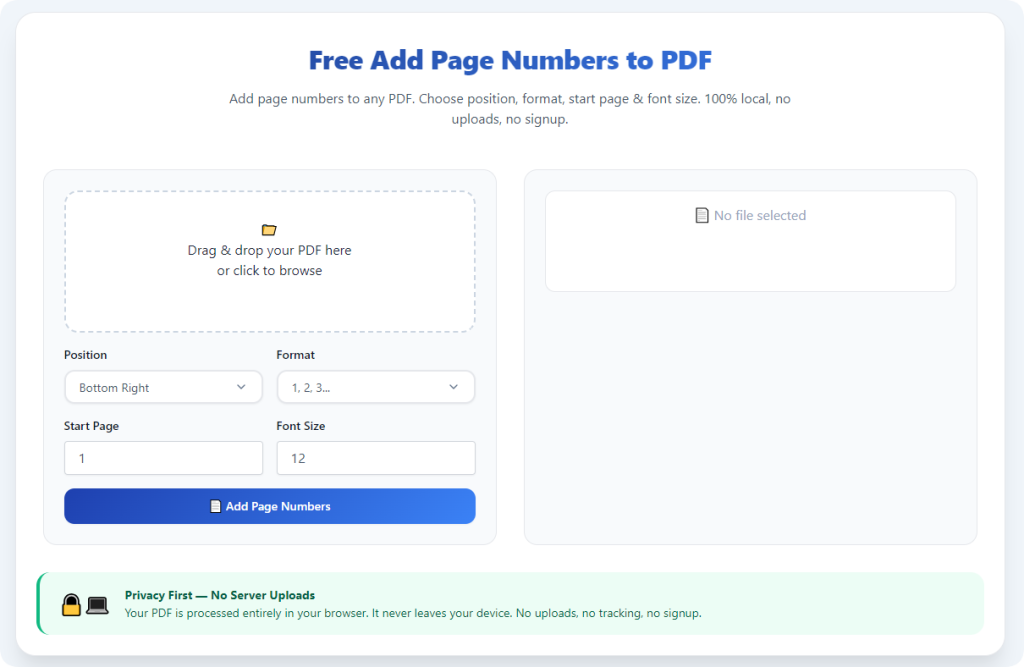
Step 3: Upload Your PDF File
Upload your document using drag-and-drop or standard file selection. Browser tools support all standard PDF file sizes and multi-page documents for flexible processing.
Step 4: Customize Page Number Settings
Adjust your preferred page number position, including top corners, bottom corners, or page center. Modify font size, color, and style to match your document’s tone. Set a custom starting number for segmented or chaptered files.
Step 5: Apply Page Numbering
Initiate the formatting process with one click. The tool will automatically add consistent page numbers across every page while preserving your original PDF structure and content quality.
Step 6: Preview and Fine-Tune
Review the live preview carefully. Confirm page numbers do not overlap text, tables, or visual content. Adjust positioning or sizing if any section appears cramped or misaligned.
Step 7: Download Your Finished PDF
Once you confirm perfect formatting, download the edited PDF directly to your device. The final file features clean, uniform page numbers and zero unwanted modifications.
Common Mistakes to Avoid With Online PDF Page Numbering
Even when you add page numbers to PDF without software, small user errors can compromise document quality. Avoid these common pitfalls for flawless results.
Overlapping page number placement
Placing numbers too close to text or headers causes overlap during viewing and printing. Always maintain clean margins between page numbers and core content.
Inconsistent styling choices
Mismatched font sizes or colors create unpolished documents. Keep styling uniform across all pages for a cohesive, professional appearance.
Incorrect starting page sequencing
For split documents or chaptered content, failing to adjust the starting number breaks overall sequence alignment. Double-check number values before finalizing files.
Skipping the preview stage
Previewing catches subtle placement errors that are easy to overlook. This quick step eliminates post-download rework and saves valuable time.
Expert Tips for Better Software-Free PDF Formatting
Use these professional tips every time you add page numbers to PDF without software to maximize quality and consistency across all your documents.
- Match page number font color and size to your document’s original text for a seamless, natural look.
- Use bottom-center placement for formal academic papers and printed booklets to follow standard formatting guidelines.
- Choose corner placement for business reports to keep page numbers unobtrusive and focused on content readability.
- Process one PDF at a time for precise customization, especially for formal submission files.
- Always store the original unedited PDF alongside the new version for future revisions and reformatting.
Final Thoughts
You never need bulky desktop software to complete basic PDF page numbering. Traditional installed editors waste storage, require updates, and overcomplicate simple formatting tasks with unnecessary features and paywalls.
Learning to add page numbers to PDF without software delivers a faster, cleaner, and more flexible alternative. Browser-based tools provide full customization, zero device clutter, instant processing, and watermark-free professional results for every user.
Whether you are formatting school assignments, business documents, digital booklets, or personal archives, this no-install workflow streamlines your entire document process. It removes unnecessary barriers and lets you achieve polished, organized PDFs in just a few clicks.
Stick with software-free PDF editing for all your quick formatting needs. It is the most efficient, accessible, and reliable way to add clean page numbers to any PDF without sacrificing quality or wasting resources.
After learning the operation method, click the link below to enter the tool page for immediate use.