Paraphrasing is a core skill for all types of writers, whether you are working on academic papers, professional reports, blog content, or personal write-ups. The main goal of paraphrasing is simple: reword sentences to boost originality, fix repetitive phrasing, and improve readability without altering the author’s intended message.
Unfortunately, most free online paraphrasing tools fail at this basic standard. Generic tools prioritize fast synonym swaps over contextual accuracy. They often twist core arguments, modify factual data, and distort sentence intent. This leaves users with rewritten content that sounds unique but carries incorrect or misleading information.
This critical flaw creates serious consequences. Students face factual errors in academic papers, content creators publish misleading articles, and professionals submit inaccurate business documents. This is why a reliable paraphrasing tool that preserves original meaning is an essential editing tool for every writer.
This detailed, beginner-friendly guide breaks down everything you need to know. We cover the flaws of low-quality paraphrasers, key features of meaning-safe tools, real-world use cases, and a step-by-step workflow to perfectly use a paraphrasing tool that preserves original meaning for flawless, accurate rewriting every time.
Why Standard Paraphrasing Tools Ruin Original Content Meaning
Most mainstream paraphrasing platforms rely on basic word replacement algorithms. These tools ignore context, sentence logic, and content nuance, leading to distorted final text.
Blind synonym swapping breaks context
Basic tools replace words with random synonyms without checking sentence flow. Many synonyms do not match the original context, which shifts the overall message and creates confusing phrasing.
Alters key facts and data points
For academic and technical content, small word changes can skew statistics, research conclusions, and definitions. Generic paraphrasers often rewrite technical terms, changing accurate content into incorrect statements.
Disrupts logical sentence structure
Low-quality tools rearrange words randomly instead of restructuring sentences logically. The final text feels disjointed and fails to deliver the original argument or explanation clearly.
Removes subtle contextual nuances
Many writing pieces rely on subtle tone and contextual details to convey complete meaning. Standard paraphrasers strip these nuances, oversimplifying content and distorting the author’s original intent.
Creates unprofessional inaccurate content
Content rewritten with generic tools often contains hidden inaccuracies. These errors lead to lower academic grades, unprofessional work submissions, and unreliable published content.
Core Benefits of a Paraphrasing Tool That Preserves Original Meaning
A specialized paraphrasing tool that preserves original meaning solves every flaw found in generic rewriting tools. It balances unique content creation with 100% contextual accuracy.
Locks in all original facts and logic
The biggest advantage is strict meaning retention. This tool rewrites phrasing and sentence structure while protecting every core fact, argument, definition, and data point from alteration.
Generates unique plagiarism-safe text
It delivers deep structural rewriting to boost content originality. Users get fresh, unique phrasing that passes plagiarism checks without changing a single key detail from the original draft.
Maintains original tone and nuance
Meaning-safe paraphrasers recognize content tone, whether formal, academic, explanatory, or casual. They preserve subtle writing nuances while refining awkward or repetitive sentences.
Eliminates factual rewriting errors
Unlike generic tools, professional meaning-preserving algorithms avoid altering technical terms, research findings, and proper definitions. This eliminates costly factual mistakes in final content.
Saves time on manual correction
Users no longer need to spend hours fixing distorted rewritten text. A paraphrasing tool that preserves original meaning delivers accurate results on the first try, cutting down revision workload drastically.
Boosts overall content readability
The tool polishes choppy sentences, fixes repetitive wording, and improves flow. It upgrades writing quality while keeping the original message fully intact.
Key Features of a Quality Paraphrasing Tool That Preserves Original Meaning
Not all accurate paraphrasing tools offer the same performance. A top-tier paraphrasing tool that preserves original meaning includes these unique, accuracy-focused features.
Context-aware AI rewriting logic
Advanced contextual algorithms analyze full sentence and paragraph logic before rewriting. Instead of isolated word swaps, it restructures text based on overall content meaning for precise results.
Fixed factual data protection
The tool automatically locks numbers, statistics, technical terminology, and formal definitions. These critical elements remain unchanged throughout the rewriting process.
Multi-level structural rewriting
It rearranges clauses, adjusts sentence order, and reworks phrasing deeply. This creates high originality without shifting the core message or contextual logic.
Tone retention technology
Quality tools adapt rewriting style to match your original tone. Formal academic content stays formal, while explanatory content retains its instructional clarity.
Minimal manual adjustment required
Accurate paraphrasing outputs require almost no post-editing for meaning fixes. Users only need minor tweaks for stylistic preference, not factual correction.
Full paragraph coherence maintenance
The tool analyzes entire paragraphs to ensure consistent logic flow. Rewritten sentences connect naturally, just like the original draft, avoiding disjointed content.
Best Use Cases for Meaning-Safe Paraphrasing Tools
A paraphrasing tool that preserves original meaning is essential for any writing project where accuracy matters more than quick rewording.
Academic research and essay writing
Students and researchers rewrite source content, literature reviews, and analysis paragraphs. The tool preserves research accuracy, ensuring no distorted data or arguments in graded papers.
Professional business report editing
Business professionals refine reports, proposals, and analysis documents. Accurate paraphrasing protects company data, conclusions, and professional statements.
Educational study material creation
Teachers and learners rephrase textbook content and lecture notes. Original educational meaning stays intact while creating unique study resources.
Informational blog and article rewriting
Content creators refresh existing informational articles. They boost content uniqueness for publishing without altering factual explanations or guidance.
Technical and instructional writing
Manuals, guides, and technical explanations rely on precise wording. Meaning-safe paraphrasing improves sentence flow without confusing technical instructions.
Step-by-Step Guide to Use Paraphrasing Tool That Preserves Original Meaning
Follow this simple workflow to generate 100% accurate, unique content with zero meaning distortion every single time.
Step 1: Finalize Your Original Draft
Complete your writing and confirm all facts, arguments, and explanations are accurate. Never paraphrase unedited rough drafts with uncertain logic or incorrect data.
Fix basic spelling and punctuation errors to help the tool focus on quality contextual rewriting.
Step 2: Choose a Meaning-Preserving Paraphraser
Select a verified paraphrasing tool that preserves original meaning. Avoid generic tools that prioritize speed and word swapping over contextual accuracy.
Step 3: Paste Complete Logical Text Blocks
Paste full sentences or complete paragraphs instead of fragmented text. Full context allows the algorithm to understand your message and rewrite accurately.
Fragmented text often leads to confused rewriting, even on high-quality platforms.
Step 4: Initiate Contextual Paraphrasing
Start the rewriting process. The tool will analyze paragraph logic, protect core facts, and restructure phrasing while locking down your original meaning.
Allow a few seconds for full contextual analysis to ensure precise results.
Step 5: Cross-Compare Original and Rewritten Text
Always compare the new version side by side with your original draft. Verify all key facts, explanations, and core arguments remain unchanged.
Check for nuanced tone consistency to ensure the content matches your original intent.
Step 6: Apply Minor Stylistic Tweaks
While meaning stays perfect, some sentences may need small stylistic adjustments. Tweak awkward word choices to enhance readability without altering core meaning.
Step 7: Save and Finalize Your Content
Once verified, copy your polished, unique, and fully accurate text. Paste it back into your document and save the final version for submission or publishing.
Common Paraphrasing Errors & Quick Fixes
Even with a premium paraphrasing tool that preserves original meaning, minor issues can occur with improper usage. Use these fixes for perfect results.
Slightly awkward sentence flow
Automated restructuring may create stiff phrasing in long sentences. Manually adjust word order while keeping all original facts unchanged.
Overly simplified complex content
Technical content may lose slight complexity after rewriting. Restore necessary professional terms to match original depth.
Inconsistent sentence length
Rewritten paragraphs may have uneven sentence structure. Adjust phrasing rhythm to match the smooth flow of your original draft.
Expert Tips for Meaning-Safe Paraphrasing
Use these professional tips to maximize accuracy and originality with your paraphrasing tool that preserves original meaning.
- Always work with complete paragraphs to give the tool full contextual reference for accurate rewriting.
- Prioritize structural sentence changes over word swaps to boost originality without meaning loss.
- Double-check all numerical data, terms, and definitions after paraphrasing for full accuracy.
- Use the tool for revision stages only to keep your original writing voice intact.
- Avoid over-paraphrasing short sentences, as simple content rarely needs structural adjustment.
- Cross-verify rewritten academic content to ensure alignment with original research arguments.
Final Thoughts
Paraphrasing success does not depend on how many words you change. It depends entirely on how well you retain the original message while creating unique content. Generic paraphrasers fail this fundamental standard by distorting facts and twisting context.
A reliable paraphrasing tool that preserves original meaning solves this critical problem. It delivers unique, plagiarism-safe content, improves readability, and protects every core detail of your original writing.
Whether you are completing academic assignments, refining business documents, or creating online content, meaning-safe paraphrasing ensures your work remains accurate, professional, and credible.
By following this complete guide, you can master accurate rewriting, eliminate factual errors, and produce high-quality unique content without sacrificing your original writing intent.
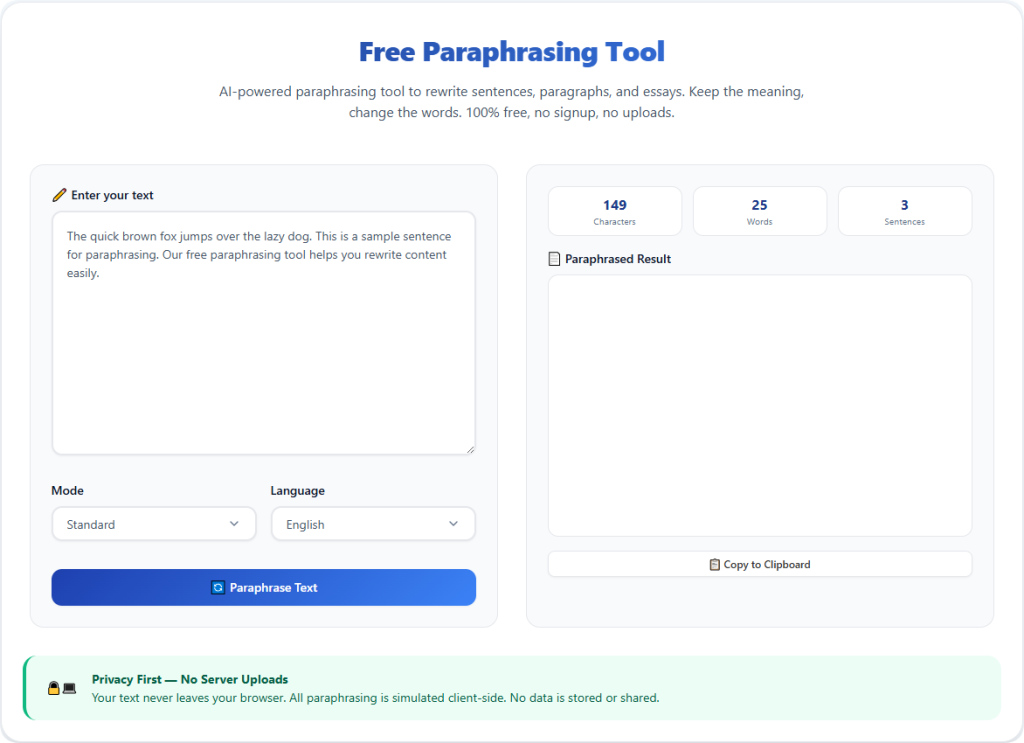
After learning the operation method, click the link below to enter the tool page for immediate use.